 Blogs

 Oct 24, 2026
 7 mins read
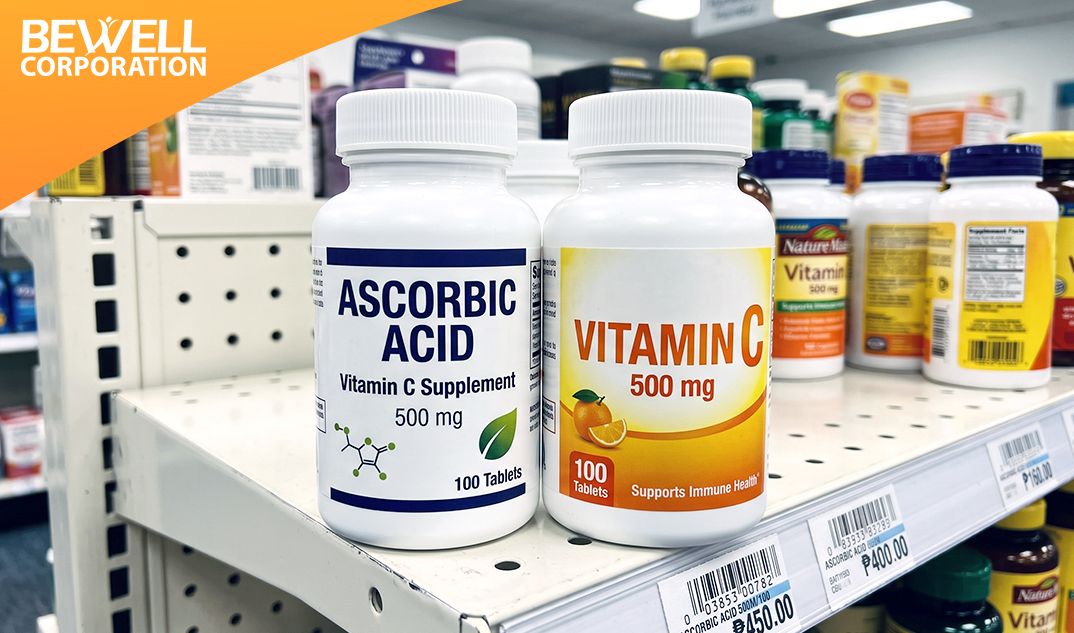
Yes, vitamin C and ascorbic acid are the same thing. "Vitamin C" is the name of the nutrient, and L-ascorbic acid is the chemical it refers to. The NIH Office of Dietary Supplements puts it plainly: "Vitamin C, also known as L-ascorbic acid, is a water-soluble vitamin." The name "ascorbic acid" was chosen in the 1930s by the scientists who studied it, to point to its role against scurvy. Vitamin C made in a lab and vitamin C in fruit are chemically identical, and mineral salts such as sodium ascorbate are listed by the NIH as forms of vitamin C.
The Names on the Evidence
Is vitamin C the same as ascorbic acid? "Vitamin C, also known as L-ascorbic acid, is a water-soluble vitamin." Source: NIH ODS.
Does "vitamin C" cover anything else? It covers "both ascorbic acid and dehydroascorbic acid (DHA), since both exhibit anti-scorbutic activity." Source: Institute of Medicine, 2000.
Where does the name come from? It replaced "hexuronic acid, which was not distinctive". Source: Haworth, Nobel Lecture, 1937.
Is lab-made vitamin C different from food vitamin C? They are "chemically identical". Source: Carr and Vissers, 2013.
Does the body absorb them differently? Steady-state human studies "have shown no differences between synthetic and natural vitamin C". Source: Carr and Vissers, 2013.
Can the body make its own? Humans "are unable to synthesize vitamin C endogenously, so it is an essential dietary component". Source: NIH ODS.
Is sodium ascorbate a form of vitamin C? The NIH lists "sodium ascorbate; calcium ascorbate; other mineral ascorbates" among vitamin C supplement forms. Source: NIH ODS.
Is Vitamin C the Same as Ascorbic Acid?
Yes. The two names describe one substance from two angles. "Vitamin C" is the nutrition name, the one you see in dietary guidelines and on food labels. "Ascorbic acid" is the chemistry name, the one a pharmacist or a chemist uses.
The NIH Office of Dietary Supplements states: "Vitamin C, also known as L-ascorbic acid, is a water-soluble vitamin that is naturally present in some foods, added to others, and available as a dietary supplement."
So when you see "ascorbic acid" on a supplement or food label, it is the vitamin itself.
Does "Vitamin C" Mean Only Ascorbic Acid?
Almost, with one small addition. The Institute of Medicine, in the reference report that set intake values for vitamin C, defines the term a little more widely:
"The term vitamin C refers to both ascorbic acid and dehydroascorbic acid (DHA), since both exhibit anti-scorbutic activity."
Dehydroascorbic acid is the oxidized form of ascorbic acid. The same report calls ascorbic acid "the functional and primary in vivo form of the vitamin". The NIH notes that laboratory studies found dehydroascorbic acid can enter cells and be turned back into ascorbic acid, but that its "contribution to overall vitamin C economy are unknown."
For anyone buying or reading a label, the practical answer is simple: vitamin C and ascorbic acid are the same nutrient.
Where Does the Name "Ascorbic Acid" Come From?
Before it had its current name, the substance was called hexuronic acid. Albert Szent-Györgyi and Walter Haworth both worked on it, and both gave Nobel lectures on it in 1937.
In his Nobel lecture, Haworth explained the change: "On the suggestion of Professor Szent-Györgyi and myself, the name of the substance was changed from that of hexuronic acid, which was not distinctive, to that of ascorbic acid."
Szent-Györgyi described it in his own lecture. He had found paprika to be a rich source of the substance, "which, with Haworth, I re-baptized ascorbic acid."
The new name points to what made the substance matter: its activity against scurvy, the disease caused by a lack of vitamin C. The Institute of Medicine still uses that idea in its definition, describing vitamin C by its "anti-scorbutic activity".
Is Lab-Made Vitamin C the Same as Natural Vitamin C?
Chemically, yes. Vitamin C was first made in a laboratory in the early 1930s, according to a 2013 review, and lab-made and food vitamin C are the same molecule.
A 2013 review in the journal Nutrients by Carr and Vissers looked at this question directly. It states that "synthetic and food-derived vitamin C is chemically identical" and that "all steady state comparative bioavailability studies in humans have shown no differences between synthetic and natural vitamin C, regardless of the subject population, study design or intervention used."
The NIH reaches the same conclusion, stating that supplement ascorbic acid "has equivalent bioavailability to that of naturally occurring ascorbic acid in foods, such as orange juice and broccoli".
Why Do We Need Vitamin C From Food or Supplements?
Because the body cannot make it. The NIH states that "humans, unlike most animals, are unable to synthesize vitamin C endogenously, so it is an essential dietary component."
Most animals produce their own vitamin C, and humans cannot, so every bit of vitamin C in the body comes from what we eat or take. How much an adult needs each day is covered in vitamin C 500mg or 1000mg.
What Do Sodium Ascorbate and Other "Ascorbate" Names Mean?
"Ascorbate" names describe vitamin C attached to something else, usually a mineral. The NIH lists several as forms of vitamin C supplements: "sodium ascorbate; calcium ascorbate; other mineral ascorbates; ascorbic acid with bioflavonoids; and combination products, such as Ester-C".
So a label that says sodium ascorbate is still a vitamin C product. The mineral part changes some properties, such as acidity and sodium content. Those differences, with the figures, are explained in sodium ascorbate vs ascorbic acid.
Why Is Ascorbic Acid Listed on Food Labels?
Because it is also used as a food additive, separate from its role as a vitamin. The Codex Alimentarius, the international food standards body run by the FAO and WHO, lists ascorbic acid as food additive number 300, with the synonym "Vitamin C". Its listed functions include antioxidant, acidity regulator and flour treatment agent.
Related compounds have their own numbers:
300 Ascorbic acid, synonym "Vitamin C"
301 Sodium ascorbate
302 Calcium ascorbate
304 Ascorbyl palmitate, synonym "Vitamin C palmitate"
All four are listed in the antioxidant class, which means they are added to protect food from spoiling or changing colour. Seeing "ascorbic acid" or "300" on a packaged food tells you it was used for that purpose. It does not tell you how much vitamin C the food gives you; for that, read the nutrition panel.
How to Read the Names on a Label
Vitamin C and ascorbic acid are the same nutrient.
Sodium ascorbate and calcium ascorbate are mineral forms of vitamin C. They also carry sodium or calcium.
"Equivalent to" on a supplement label tells you how much vitamin C is in a mineral form. Read it, because the salt weight and the vitamin C content are different numbers.
300, 301, 302, 304 on a food label are additive codes. They show the ingredient's job in the food, not a vitamin amount.
If you are unsure which product suits you, ask your pharmacist.
Where Ascorbic Acid (Bewell-C) Fits
Ascorbic Acid (Bewell-C) is ascorbic acid (as 500 mg sodium ascorbate) per capsule, one of the mineral forms of vitamin C the NIH lists. It is registered with the Philippine FDA as a non-prescription drug rather than as a food supplement, under registration number DRHR-1355, and it is indicated "For the treatment and prevention of Vitamin C deficiency." Its label directions read: "Take 1-3 capsules a day with beverage or meal or as prescribed by physician." Together with proper diet and exercise.
Being a mineral form does not make it more or less vitamin C than ascorbic acid. Read the label for what each capsule contains and how to take it.
Ascorbic Acid + Zinc (Bewell-C Zinc Protect) and Bewell-C Kids carry the same ingredient, ascorbic acid (as sodium ascorbate), with zinc added.
Ask a doctor or pharmacist what suits you, especially if you are pregnant, breastfeeding, managing a health condition, or taking other medicines.
Ascorbic Acid is the generic name of Bewell-C.
Product Facts: Ascorbic Acid (Bewell-C)
Product: Ascorbic Acid (Bewell-C) · Ascorbic acid (as 500 mg sodium ascorbate) per capsule
Indication: For the treatment and prevention of Vitamin C deficiency.
Directions: Take 1-3 capsules a day with beverage or meal or as prescribed by physician.
FDA Reg. No.: DRHR-1355
What to Do With This in Practice
Treat "vitamin C" and "ascorbic acid" on a label as the same nutrient.
Lab-made and food vitamin C are the same molecule.
An "ascorbate" is vitamin C in a mineral form. Check what else it carries.
Additive codes on food packs are not a vitamin amount.
Ask your doctor or pharmacist about anything involving a medical condition, a pregnancy, a child or other medicines.
About Bewell Nutraceuticals Corporation
Bewell Nutraceuticals Corporation is a Philippine FDA-licensed Trader and Distributor of both Drug and Food, operating from Quezon City since 2007. Bewell manages the formulation and the sourcing of raw materials for its products, which are manufactured by a partner and sold through Mercury Drug, Watsons, South Star Drug, Rose Pharmacy and other drugstores nationwide.
Frequently Asked Questions
Is vitamin C the same as ascorbic acid?
Yes. The NIH Office of Dietary Supplements states: "Vitamin C, also known as L-ascorbic acid, is a water-soluble vitamin." Vitamin C is the nutrition name and ascorbic acid is the chemical name for the same substance.
Why is vitamin C called ascorbic acid?
The name was chosen in the 1930s by Albert Szent-Györgyi and Walter Haworth to replace the earlier name, hexuronic acid, which Haworth described as "not distinctive". The new name points to its activity against scurvy.
Is synthetic vitamin C as good as natural vitamin C?
They are the same molecule. A 2013 review found synthetic and food-derived vitamin C "chemically identical", and that steady-state human studies showed "no differences" between them.
Is sodium ascorbate vitamin C?
Yes. The NIH lists sodium ascorbate among the forms of vitamin C used in supplements. It carries sodium as well, which is explained in our article on sodium ascorbate vs ascorbic acid.
Is Ascorbic Acid (Bewell-C) ascorbic acid or sodium ascorbate?
Both describe the same ingredient. Ascorbic Acid (Bewell-C) contains ascorbic acid (as sodium ascorbate): ascorbic acid is the vitamin, and sodium ascorbate is the form it comes in, one of the forms the NIH lists. Ascorbic Acid + Zinc (Bewell-C Zinc Protect) and Bewell-C Kids carry the same ingredient, with zinc added. Read each pack for what it contains and how to take it.
What does "ascorbic acid" mean on a food label?
It is often added as an antioxidant to keep food fresh. Codex lists it as additive 300, with the synonym "Vitamin C". The code shows its job in the food, not how much vitamin C the food provides.
Can the body make its own vitamin C?
No. The NIH states that humans "are unable to synthesize vitamin C endogenously, so it is an essential dietary component."
Related Bewell Products
Ascorbic Acid (Bewell-C): Ascorbic acid (as 500 mg sodium ascorbate) per capsule, the non-acidic form of vitamin C. Directions: "Take 1-3 capsules a day with beverage or meal or as prescribed by physician."
Ascorbic Acid + Zinc (Bewell-C Zinc Protect): The same non-acidic vitamin C together with 10 mg of zinc, in a single capsule. Directions: "Take 1-2 capsules a day with beverage or meal or as prescribed by physician."
Bewell-C Kids: Non-acidic vitamin C with zinc, in a syrup and in oral drops, formulated for children.
For how to take any of these, read the instruction printed on that product's own pack, and ask your pharmacist or doctor if you are unsure.
Related Articles
Medical Disclaimer
This article is general information about vitamin C, drawn from Philippine and international health sources. It is not medical advice and not a substitute for consulting a qualified professional. Consult your doctor or pharmacist before starting, stopping or changing any vitamin, supplement or medicine, and always follow the directions printed on your product.
Sources
National Institutes of Health, Office of Dietary Supplements. Vitamin C: Fact Sheet for Health Professionals
Institute of Medicine. Dietary Reference Intakes for Vitamin C, Vitamin E, Selenium, and Carotenoids, Vitamin C chapter
Haworth WN. Nobel Lecture, Chemistry, 1937
Szent-Györgyi A. Nobel Lecture, Physiology or Medicine, 1937
Carr AC, Vissers MC. Synthetic or food-derived vitamin C: are they equally bioavailable? Nutrients, 2013
FAO/WHO Codex Alimentarius. General Standard for Food Additives online database
If symptoms persist, consult your doctor.
Ascorbic Acid is the generic name of Bewell-C. Ascorbic Acid + Zinc is the generic name of Bewell-C Zinc Protect.