 Blogs

 Nov 16, 2026
 11 mins read
Vitamin C deficiency happens when the body gets too little vitamin C for weeks, and its severe form is scurvy. The NIH Office of Dietary Supplements says scurvy “causes fatigue, inflammation of the gums, small red or purple spots on the skin, joint pain, poor wound healing, and corkscrew hairs” [2]. Your body cannot make vitamin C, so it has to come from food or supplements [1]. In the Philippines, the FNRI’s 2008 National Nutrition Survey measured a mean intake of 44.7 mg a day for adults, against a PDRI 2015 reference of 70 mg for men and 60 mg for women [3][4]. If you notice these signs, see a doctor, because diagnosis and treatment belong with them.
What Is Vitamin C Deficiency, and What Is Scurvy?
Vitamin C deficiency means the body is not getting enough vitamin C to do its normal work, and scurvy is what a severe, prolonged deficiency becomes. The NIH Office of Dietary Supplements puts it plainly: “Vitamin C deficiency causes scurvy” [1].
Vitamin C matters because the body cannot produce it. The NIH explains that humans “are unable to synthesize vitamin C endogenously, so it is an essential dietary component” [1]. Vitamin C is also “required for the biosynthesis of collagen”, the protein in connective tissue, and the NIH notes that “The lack of vitamin C impairs collagen synthesis, weakening connective tissues” [1]. That is why so many signs of scurvy show up in the gums, skin and joints.
The NIH separates two levels of low intake [1]:
Vitamin C inadequacy, which “occurs when intakes fall below the Recommended Dietary Allowance but are still above 10 mg/day”.
Vitamin C deficiency and scurvy: “Overt deficiency symptoms occur only if vitamin C intake falls below approximately 10 mg/day for many weeks.”
What Are the Signs and Symptoms of Vitamin C Deficiency?
The NIH Office of Dietary Supplements describes the signs in its consumer fact sheet: “Scurvy causes fatigue, inflammation of the gums, small red or purple spots on the skin, joint pain, poor wound healing, and corkscrew hairs. Additional signs of scurvy include depression as well as swollen, bleeding gums and loosening or loss of teeth. People with scurvy can also develop anemia.” [2]
Its fact sheet for health professionals adds how the signs tend to appear [1]:
Early signs: “Initial symptoms can include fatigue (probably the result of impaired carnitine biosynthesis), malaise, and inflammation of the gums.”
As it progresses: “As vitamin C deficiency progresses, collagen synthesis becomes impaired and connective tissues become weakened, causing petechiae, ecchymoses, purpura, joint pain, poor wound healing, hyperkeratosis, and corkscrew hairs.” Petechiae, ecchymoses and purpura are small or larger spots of bleeding under the skin.
Anemia: “Iron deficiency anemia can also occur due to increased bleeding and decreased nonheme iron absorption secondary to low vitamin C intake.”
In children: “In children, bone disease can be present.”
The NIH is clear that this is serious: “Scurvy is fatal if it is not treated.” [2] These signs are a reason to see a doctor, not to diagnose yourself. Several of them can have other causes, and only a doctor can tell what is behind them.
What Causes Vitamin C Deficiency?
The cause is getting too little vitamin C for too long. The NIH states that “People who get little or no vitamin C (below about 10 mg per day) for many weeks can get scurvy” [2], and that “signs can appear within 1 month of little or no vitamin C intake (below about 10 mg/day)” [1].
Two facts from the NIH explain why intake can fall short [1]:
The body cannot make it. Every milligram has to come from what you eat and drink, or from supplements.
Some situations raise the need or lower absorption. “People who smoke require 35 mg more vitamin C per day than those who do not smoke”, and “Some medical conditions can reduce the absorption of vitamin C and/or increase the amount needed by the body.”
How Much Vitamin C Do Filipino Adults Actually Get?
On average, less than the Philippine reference amount. In the 7th National Nutrition Survey of 2008, the Food and Nutrition Research Institute (FNRI) of the Department of Science and Technology measured a mean one-day vitamin C intake of 44.7 mg for Filipino adults [3]. The Philippine Dietary Reference Intakes (PDRI) 2015 set the Recommended Nutrient Intake at 70 mg a day for adult men and 60 mg a day for adult women [4].
The same survey reported how many people in each group met the Estimated Average Requirement for vitamin C, which it set at 80% of the reference intake then in use. For adults the figure was 23.8%, or fewer than one in four [3].
Adults: mean intake 44.7 mg a day; 23.8% met the Estimated Average Requirement.
Elderly: 44.5 mg a day; 24.3%.
Pregnant women: 56.1 mg a day; 28.2%.
Lactating mothers: 47.2 mg a day; 16.9%.
Adolescents: 38.3 mg a day; 19.5%.
Children, 6 to 12 years: 29.1 mg a day; 30.3%.
Children, 6 months to 5 years: 23.6 mg a day; 30.2%.
Source: FNRI, 7th National Nutrition Survey: 2008, Individual Food and Nutrient Intakes [3].
Two notes on reading these figures. The survey dates from 2008 and measured intakes against the reference values in use at the time, not PDRI 2015 [3]. And an intake below the reference amount is not the same as scurvy, which the NIH links to intakes below about 10 mg a day for many weeks [1]. What the survey does show is that, on average, adults ate less vitamin C than the Philippine reference amount.
For comparison, the US NIH sets 90 mg a day for men and 75 mg for women aged 19 and over, plus 35 mg more for people who smoke [1]. The full picture on daily amounts is in how much vitamin C Filipino adults actually need per day.
Who Is at Risk of Vitamin C Deficiency?
The NIH Office of Dietary Supplements names four groups who are more likely than others to get too little vitamin C [1][2]:
People who smoke, and people exposed to secondhand smoke. The NIH notes that “people who smoke have lower plasma and leukocyte vitamin C levels than people who do not smoke”, and that people who smoke need 35 mg more vitamin C a day than people who do not [1].
Infants fed evaporated or boiled cow’s milk. The NIH explains this is “because cow’s milk has very little vitamin C and heat can destroy vitamin C”, and adds that “Breast milk and infant formula have adequate amounts of vitamin C.” [2] Ask your pediatrician how your baby should be fed.
People who eat a very limited variety of food. The NIH lists “some older, impoverished individuals who prepare their own food; people who abuse alcohol or drugs; food faddists; people with mental illness; and, occasionally, children” [1].
People with malabsorption and certain chronic diseases. The NIH names “severe malabsorption, some types of cancer, and kidney disease requiring hemodialysis” [2].
The NIH adds that vitamin C deficiency “can still occur in people with limited food variety” [1]. Pregnancy and breastfeeding also raise the Philippine reference amount, as set out in vitamin C for pregnant women. If any of these apply to you, mention it to your doctor.
How Is Vitamin C Deficiency Diagnosed?
A doctor diagnoses vitamin C deficiency, by looking at your symptoms, your diet and your medical history, and by ordering tests if needed. The NIH notes that “Vitamin C status is typically assessed by measuring plasma vitamin C levels” [1], which means a blood test.
Please do not diagnose or treat yourself. Fatigue, gum problems and spots on the skin need a proper medical check, and a doctor can rule out other causes. If a doctor confirms that your vitamin C is low, they will tell you how to raise your intake and whether a vitamin C product suits you. The NIH notes that people “receiving vitamin C for medical treatment” should “be under the care of a physician” [1].
Your pharmacist can also help you read a vitamin C pack and check it against what your doctor advised. What a pharmacist looks at first is covered in which vitamin C pharmacists recommend and what they check first.
How Can You Lower Your Risk of Vitamin C Deficiency?
By getting enough vitamin C every day, because your body cannot make its own. The NIH points to three practical facts [1]:
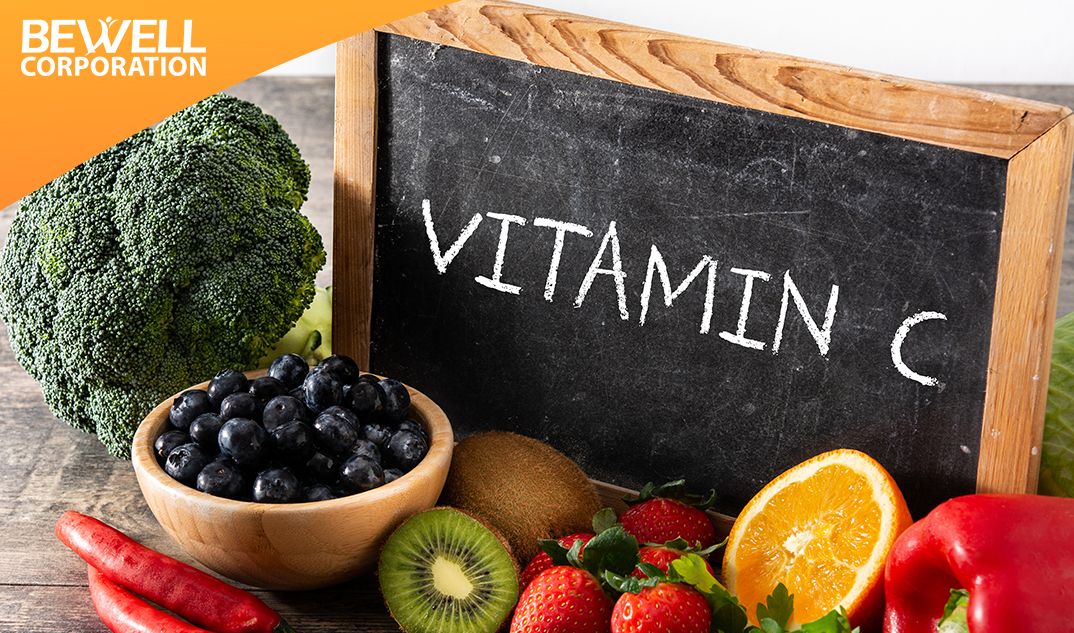
Fruits and vegetables carry it, “especially citrus fruits, red and green peppers, kiwifruit, broccoli, strawberries, and Brussels sprouts.”
Supplements can fill a gap. “Dietary supplements may be useful in cases where it is not possible to meet the needs for specific nutrients through food alone, especially during certain life stages.”
Supplement vitamin C is absorbed like food vitamin C. “The ascorbic acid used in supplements has a bioavailability that is equivalent to that of the ascorbic acid that occurs naturally in foods.” Bioavailability means how much of it the body absorbs and uses.
If you smoke, remember the NIH figure of 35 mg more a day [1]. Consult your doctor or pharmacist about the amount that suits you, especially if you take other supplements or regular medicines.
Where Ascorbic Acid (Bewell-C) Fits
Both Bewell-C capsules carry a label indication for vitamin C deficiency, quoted word for word below.
Ascorbic Acid (Bewell-C) is ascorbic acid (as 500 mg sodium ascorbate) per capsule, registered with the Philippine FDA as a non-prescription drug rather than as a food supplement, under registration number DRHR-1355 [5]. Its label indication reads: “For the treatment and prevention of Vitamin C deficiency.” Its label directions read: “Take 1-3 capsules a day with beverage or meal or as prescribed by physician.” Together with proper diet and exercise.
Ascorbic Acid + Zinc (Bewell-C Zinc Protect) is the same ascorbic acid (as 500 mg sodium ascorbate) together with 10 mg of zinc per capsule, registered with the Philippine FDA as an over-the-counter drug under registration number DRP-8652 [6]. Its label indication reads: “For the treatment and prevention of Vitamin C and Zinc deficiencies.” Its label directions read: “Take 1-2 capsules a day with beverage or meal or as prescribed by physician.” Together with proper diet and exercise. What zinc adds is covered in vitamin C and zinc.
Both use sodium ascorbate, and the Ascorbic Acid (Bewell-C) pack describes itself as “NON-ACIDIC VITAMIN C” [5]. How sodium ascorbate and ascorbic acid differ is explained in sodium ascorbate vs ascorbic acid.
If a doctor has told you that your vitamin C is low, or you are in one of the groups above, ask your doctor or pharmacist whether Ascorbic Acid (Bewell-C) or Ascorbic Acid + Zinc (Bewell-C Zinc Protect) suits you, especially if you are pregnant, breastfeeding, managing a health condition, or taking other medicines.
Product Facts: Ascorbic Acid (Bewell-C)
Ascorbic acid (as 500 mg sodium ascorbate) per capsule
Indication: “For the treatment and prevention of Vitamin C deficiency.”
Directions: “Take 1-3 capsules a day with beverage or meal or as prescribed by physician.”
FDA Reg. No. DRHR-1355
Product Facts: Ascorbic Acid + Zinc (Bewell-C Zinc Protect)
Ascorbic acid (as 500 mg sodium ascorbate) and 10 mg zinc per capsule
Indication: “For the treatment and prevention of Vitamin C and Zinc deficiencies.”
Directions: “Take 1-2 capsules a day with beverage or meal or as prescribed by physician.”
FDA Reg. No. DRP-8652
About Bewell Nutraceuticals Corporation
Bewell Nutraceuticals Corporation is a Philippine FDA-licensed Trader and Distributor of both Drug and Food, operating from Quezon City since 2007. Bewell manages the formulation and the sourcing of raw materials for its products, which are manufactured by a partner and sold through Mercury Drug, Watsons, South Star Drug, Rose Pharmacy, Rojon, Bewell Express and other drugstores nationwide. Its vitamin C range includes Ascorbic Acid (Bewell-C), Ascorbic Acid + Zinc (Bewell-C Zinc Protect) and Ascorbic Acid + Zinc (Bewell-C Kids). To see the full range and where to buy it, visit the Bewell-C product page.
Frequently Asked Questions
What is vitamin C deficiency?
Vitamin C deficiency means the body has had too little vitamin C for a long time, and its severe form is scurvy. The NIH Office of Dietary Supplements states that “Vitamin C deficiency causes scurvy” and that overt deficiency symptoms appear only if intake “falls below approximately 10 mg/day for many weeks.” The body cannot make vitamin C, so it has to come from food or supplements. A doctor should confirm any suspected deficiency.
What are the symptoms of vitamin C deficiency?
According to the NIH Office of Dietary Supplements, scurvy “causes fatigue, inflammation of the gums, small red or purple spots on the skin, joint pain, poor wound healing, and corkscrew hairs.” Additional signs include depression, swollen and bleeding gums, and loosening or loss of teeth, and people with scurvy can also develop anemia. Several of these signs can have other causes, so see a doctor rather than diagnosing yourself.
What causes scurvy?
Scurvy is caused by getting too little vitamin C for weeks. The NIH Office of Dietary Supplements states that “People who get little or no vitamin C (below about 10 mg per day) for many weeks can get scurvy.” Because the body cannot make vitamin C, it depends on daily intake from food or supplements.
How long does it take to develop scurvy?
The NIH Office of Dietary Supplements says the timeline varies with the body’s vitamin C stores, but “signs can appear within 1 month of little or no vitamin C intake (below about 10 mg/day).” Anyone who notices fatigue, gum problems or spots on the skin, especially after a long period of a very limited diet, should see a doctor.
Who is at risk of vitamin C deficiency?
The NIH Office of Dietary Supplements names four groups: people who smoke and people exposed to secondhand smoke; infants fed evaporated or boiled cow’s milk; people who eat a very limited variety of food; and people with malabsorption and certain chronic diseases, such as some types of cancer and kidney disease requiring hemodialysis. People who smoke need 35 mg more vitamin C a day than people who do not. If any of these apply to you, tell your doctor.
Do Filipinos get enough vitamin C?
On average, Filipino adults ate less vitamin C than the Philippine reference amount in the FNRI’s 2008 national survey. The Food and Nutrition Research Institute’s 7th National Nutrition Survey (2008) measured a mean intake of 44.7 mg a day for adults, and 23.8% of adults met the Estimated Average Requirement. The Philippine Dietary Reference Intakes 2015 set 70 mg a day for adult men and 60 mg for adult women. A lower intake is not the same as scurvy, which a doctor diagnoses.
How is vitamin C deficiency diagnosed?
A doctor diagnoses vitamin C deficiency from your symptoms, diet and medical history, and may order a blood test. The NIH Office of Dietary Supplements notes that “Vitamin C status is typically assessed by measuring plasma vitamin C levels.” Do not diagnose or treat yourself; a doctor can rule out other causes and tell you how to raise your intake.
What is Bewell-C indicated for?
Ascorbic Acid (Bewell-C) is ascorbic acid (as 500 mg sodium ascorbate) per capsule, registered with the Philippine FDA as a non-prescription drug under registration number DRHR-1355, and its label indication reads: “For the treatment and prevention of Vitamin C deficiency.” Ascorbic Acid + Zinc (Bewell-C Zinc Protect), registered as an over-the-counter drug under DRP-8652, is indicated “For the treatment and prevention of Vitamin C and Zinc deficiencies.” Follow the label directions, together with proper diet and exercise, and ask your doctor or pharmacist whether either suits you.
Should I take vitamin C if I think I have a deficiency?
See a doctor first. Symptoms such as fatigue, gum problems and spots on the skin need a proper medical check, and only a doctor can confirm a deficiency and rule out other causes. If your doctor advises a vitamin C product, follow their advice and the directions on the pack, and ask your pharmacist if you take other medicines or supplements.
Related Bewell Products
Ascorbic Acid (Bewell-C): ascorbic acid (as 500 mg sodium ascorbate), the non-acidic form of vitamin C, in a capsule. Indication: “For the treatment and prevention of Vitamin C deficiency.” Directions: “Take 1-3 capsules a day with beverage or meal or as prescribed by physician.”
Ascorbic Acid + Zinc (Bewell-C Zinc Protect): the same non-acidic vitamin C together with 10 mg of zinc, in a single capsule. Indication: “For the treatment and prevention of Vitamin C and Zinc deficiencies.” Directions: “Take 1-2 capsules a day with beverage or meal or as prescribed by physician.”
Ascorbic Acid + Zinc (Bewell-C Kids): non-acidic vitamin C with zinc for children, as a syrup and as oral drops. Indication on both labels: “For the prevention and treatment of Vitamin C and Zinc deficiencies.” Syrup directions: ½ teaspoon (2.5 mL) daily below 2 years, 1 teaspoonful (5 mL) daily from 2 to 6 years, and 1 to 2 teaspoonfuls (5 to 10 mL) daily from 7 to 12 years. Oral drops directions: 0.3 mL (6 drops) below 3 months, 0.6 mL (12 drops) from 3 to 12 months, and 1.2 mL (24 drops) from 1 to 2 years. Both labels add “Or as recommended by the physician.”
Related Articles
Vitamin C 500mg or 1000mg: How Much Filipino Adults Actually Need Per Day
Which Vitamin C Do Pharmacists Recommend and What They Check First
Vitamin C for Pregnant Women: How Much You Need in the Philippines
How to Choose the Best Vitamin C in the Philippines: A 2026 Buyer’s Guide
Medical Disclaimer
This article is general information. It is not medical advice and not a substitute for consulting a qualified professional. It cannot account for your individual health. If you think you may have vitamin C deficiency, see a doctor, and consult your doctor or pharmacist before starting, stopping or changing any vitamin or medicine. Always follow the directions printed on your product.
References
Office of Dietary Supplements, National Institutes of Health. Vitamin C: Fact Sheet for Health Professionals. Vitamin C deficiency, groups at risk of vitamin C inadequacy, recommended intakes, sources, assessing vitamin C status.
Office of Dietary Supplements, National Institutes of Health. Vitamin C: Fact Sheet for Consumers. Signs of scurvy and groups who may not get enough vitamin C.
Food and Nutrition Research Institute, Department of Science and Technology. 7th National Nutrition Survey: 2008, Food Consumption Survey Component, Individual Food and Nutrient Intakes. Mean one-day vitamin C intake by population group, and proportion meeting the Estimated Average Requirement for vitamin C.
Food and Nutrition Research Institute, Department of Science and Technology. Philippine Dietary Reference Intakes 2015, Summary Tables. Recommended Nutrient Intakes for vitamin C.
Ascorbic Acid (Bewell-C) pack label, DRHR-1355. Indication, directions and formulation, read from the pack.
Ascorbic Acid + Zinc (Bewell-C Zinc Protect) pack label, DRP-8652. Indication, directions and formulation, read from the pack.
If symptoms persist, consult your doctor.
Ascorbic Acid is the generic name of Bewell-C. Ascorbic Acid + Zinc is the generic name of Bewell-C Zinc Protect and Bewell-C Kids.