 Blogs
Blogs 
 Oct 11, 2026
  11 mins read
Ask a pharmacist which vitamin C to buy and you will often not get a single brand name, and there is a legal reason for that. The Generics Act requires a drug outlet to inform any buyer about every other drug product carrying the same generic name, together with their prices, so the buyer can exercise the choice. What a professional does instead is check the pack: the generic name printed above the brand name, the amount in one capsule, the registration, the manufacturer and country, and the expiry date. Each of those checks comes from a specific Philippine law, and you can run all five yourself in under a minute.
Which Vitamin C Do Pharmacists Recommend?
The short answer is that a Philippine drugstore is not supposed to answer that question with one brand name, and the reason is written into the law that governs how medicines are sold here.
The Generics Act of 1988, Republic Act No. 6675, was amended in 2008 by Republic Act No. 9502. In its current form, section 6(d) says this:
"Drug outlets, including drugstores, hospital and non-hospital pharmacies and nontraditional outlets such as supermarkets and stores, shall inform any buyer about any and all other drug products having the same generic name, together with their corresponding prices so that the buyer may adequately exercise his option."
Read that again, because it turns the usual question inside out. The obligation is to hand you the field, not to narrow it. The same subsection goes further and requires those outlets to post a list of drug products sharing a generic name, with their prices, in a conspicuous place in the store.
So "which one do you recommend" is a question the counter is set up to answer with a comparison rather than a preference. What a pharmacist will do instead, and what the rest of this page is about, is check the pack in front of them.
Why Will a Pharmacist Not Just Tell You Which Brand to Buy?
Short answer: Philippine law asks pharmacists to help you compare products and make the choice yourself. They won't choose a brand for you, but they can explain any pack on the shelf.
There are two reasons for this.
The law protects your right to choose. The subsection above (the Generics Act) asks drug outlets to show you the products that share a generic name, with their prices. The aim is for you, the buyer, to make the choice. If a pharmacist pushed one brand, it would undercut that aim.
A pharmacist's job is to inform you. The Philippine Pharmacy Act (Republic Act No. 10918) describes the pharmacist's role as "pharmaceutical care, drug information, patient medication counseling, and health promotion."
The same law says dispensing includes "counseling or giving information, in relation to the sale or transfer of pharmaceutical products, with or without a prescription or medication order."
That last part matters for vitamin C. You don't need a prescription to get advice. You can ask the pharmacist about any vitamin C pack, even one you picked off the shelf yourself.
What to ask at the counter:
"What form of vitamin C is this, and how much is in each capsule?"
"How does this pack compare with that one?"
"I also take [your other medicines]. Is there anything I should know?"
The pharmacist won't name the best brand. They will help you read the labels so you can choose for yourself.
What Is the Generic Name of Vitamin C?
Vitamin C is sold in the Philippines under a few generic names. Ascorbic acid is the vitamin in its acid form. Sodium ascorbate is the sodium salt of the same vitamin, which is why it is described as non-acidic. Calcium ascorbate is the calcium salt, also sold as non-acidic.
That matters at the counter because the generic name, not the brand, is the unit the law works in. Section 6(c) of the Generics Act, in its current amended form, requires this:
"Any organization or company involved in the manufacture, importation, repacking, marketing and/or distribution of drugs and medicines shall indicate prominently the generic name of the product. In the case of brand name products, the generic name shall appear prominently and immediately above the brand name in all product labels as well as in advertising and other promotional materials."
Immediately above the brand name. On a compliant pack of a vitamin C registered as a drug product, the generic name is not hidden in the small print on the back; it sits directly over the name you recognise, on the front. If you cannot find it, that is a reasonable thing to ask the pharmacist about.
On which generic name to pick, the National Institutes of Health Office of Dietary Supplements is blunt:
"Research has not shown that any form of vitamin C is better than the other forms."
What does differ between them is acidity and sodium content, which is a question about your stomach rather than about strength. A pharmacist can tell you which one a given pack uses, and whether that matters for you.
What Does a Pharmacist Check on the Box First?
Five things, and every one of them is a legal requirement rather than a matter of taste. That is the point: each check is something every registered product on the shelf is already supposed to satisfy, so it tells you whether a pack is in order, not which brand is favoured.
The generic name, and where it sits. Section 6(c) above. Generic name printed prominently, immediately above the brand name. This is the first glance because it tells you what you are actually buying.
The amount in one capsule, and how many capsules the pack asks for. Read this one carefully. Some products state the weight of the compound and the vitamin C content separately, because a salt of vitamin C weighs more than the vitamin inside it, so the second number is the one to compare. Hold it against the Philippine reference figures: the Philippine Dietary Reference Intakes 2015 set 70 mg a day for men and 60 mg a day for women aged 19 and over, with an upper limit of 1,000 mg a day for adults. How much Filipino adults actually need per day works through what those figures mean in practice.
The registration. Under Republic Act No. 9711, which amended the Food, Drug and Cosmetic Act, it is a prohibited act to sell, distribute, promote or advertise any health product that requires registration and is not registered with the FDA. A registration number printed on the pack is the visible sign that the product has been through that process. A pharmacist can check it for you.
Who made it, and where. Section 7 of the Generics Act requires that "the label of all drugs and medicines shall have the following: name and country of manufacture, dates of manufacture and expiration". A pack that will not tell you who made it is a pack answering fewer questions than the law asks of it.
The expiry date. Same section for the printing, and RA 9711 section 11(l) makes selling or distributing any health product beyond its expiry date a prohibited act. Check it in the store, not at home.
What Philippine Law Already Requires on a Registered Pack
The table below sets out what to look for on a registered pack, what each item tells you, and the law it comes from.
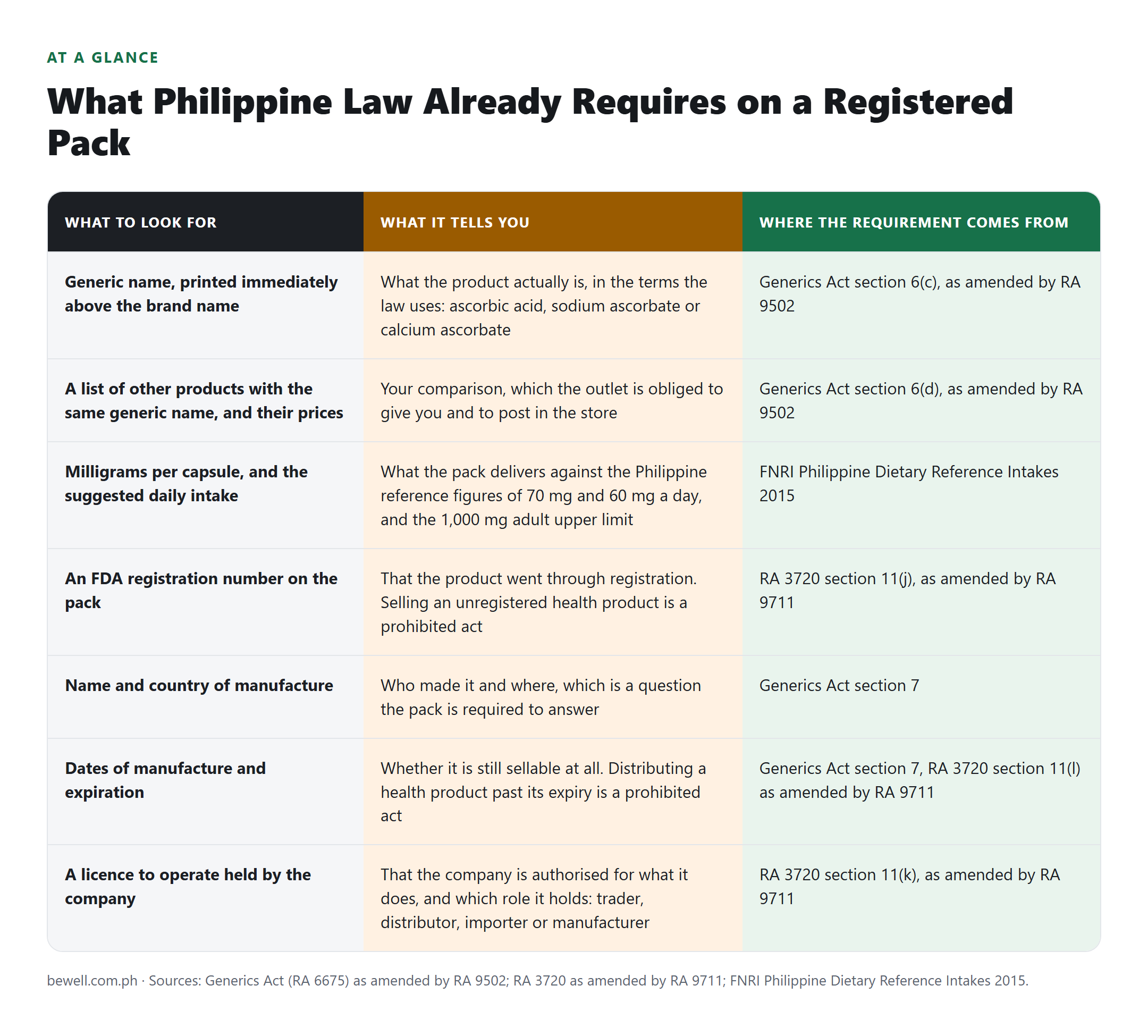
Generic name, printed immediately above the brand name. This shows what the product actually is, in the terms the law uses: ascorbic acid, sodium ascorbate or calcium ascorbate. It comes from Generics Act section 6(c), as amended by RA 9502.
A list of other products with the same generic name, and their prices. This is your comparison, which the outlet is obliged to give you and to post in the store. It comes from Generics Act section 6(d), as amended by RA 9502.
Milligrams per capsule, and the suggested daily intake. This shows what the pack delivers against the Philippine reference figures of 70 mg and 60 mg a day, and the 1,000 mg adult upper limit. The figures come from the FNRI Philippine Dietary Reference Intakes 2015.
An FDA registration number on the pack. This shows the product went through registration, and selling an unregistered health product is a prohibited act. It comes from RA 3720 section 11(j), as amended by RA 9711.
Name and country of manufacture. This tells you who made it and where, which is a question the pack is required to answer. It comes from Generics Act section 7.
Dates of manufacture and expiration. This tells you whether it is still sellable at all, since distributing a health product past its expiry is a prohibited act. It comes from Generics Act section 7 and RA 3720 section 11(l), as amended by RA 9711.
A licence to operate held by the company. This shows the company is authorised for what it does, and which role it holds: trader, distributor, importer or manufacturer. It comes from RA 3720 section 11(k), as amended by RA 9711.
Is Vitamin C a Drug or a Food Supplement?
Both, depending on the pack, and the two sit side by side on the same shelf. It is worth knowing which one you are holding, because the rules that produced the wording on the box are different.
A vitamin C registered as a drug product goes through the FDA's drug pathway. Its label carries a drug registration number, and the generic-name requirements set out above apply to it.
A vitamin C registered as a food or dietary supplement goes through a different pathway. Under Department of Health Administrative Order No. 2010-0008, reiterated by FDA Memorandum Circular No. 2015-003, material for food and dietary supplements must carry a standard reminder in Filipino telling the reader that the product is not a medicine and should not be used to treat any illness. The order replaced an older English phrase that the Department found was confusing the public.
So if two packs of the same nutrient carry noticeably different wording, the usual explanation is that they are registered in different categories. It is not a statement about how much vitamin C is in either one. Asking a pharmacist which category a pack falls into is a fair question and a quick one.
One thing holds across both categories. A supplement supplements a diet. The Philippine reference figures above are set for a population expected to eat, and calamansi, guava, papaya, mango, kamatis, malunggay, kangkong, bell pepper and cabbage are all everyday local sources of the same nutrient.
What Can You Actually Check About a Brand?
Reviews and star ratings are worth what they are worth, and they are not regulatory signals. Nobody verifies them. Four things about a Philippine vitamin brand are checkable, and they are the ones a professional would look at.
Whether the product is registered. Covered above. It is the floor, not a distinction, and a product that cannot clear it should not be on the shelf at all.
Whether the company holds a license to operate. RA 9711 makes it a prohibited act to manufacture, import, export, distribute, or retail any drug, or to manufacture, import, export, transfer or distribute any food, without the license to operate the FDA required. A company that sells health products in the Philippines holds one, and the license says what it is allowed to do.
What role does that license cover? This is the part most buyers never think about. A trader, a distributor, an importer and a manufacturer are four different things, and a company may be one of them without being the others. It is a matter of public record rather than of marketing, and it is worth knowing which one is on the box you are holding.
How long it has been in the market, and where you can buy it. A brand carried across the national pharmacy chains has been through those chains' own listing requirements, and a product you can refill anywhere is a product you are more likely to take as intended.
None of those four tells you a brand is superior. They tell you it is accountable, which is a different and more useful thing.
What Should You Ask at the Counter?
Five questions. The first one is the one almost nobody asks, and it is the one the law was written to answer.
"What else do you have with the same generic name, and what do they cost?" That is section 6(d), quoted at the top of this page. You are entitled to the list and the prices. Ask for it.
"Is this ascorbic acid or sodium ascorbate?" It is printed above the brand name, but asking opens the more useful conversation about which form sits better with you.
"How many milligrams are in one capsule, and how many capsules does the pack ask for in a day?" Then compare that against the 70 mg and 60 mg reference figures and the 1,000 mg adult upper limit.
"Can you check the registration and the expiry on this one?" Both are printed. A pharmacist reads them faster than you will.
"Here is everything else I am taking. Is there anything I should know?" This is the counselling the Pharmacy Act describes, and it applies with or without a prescription. It matters most if you are pregnant or breastfeeding, buying for a child, taking prescription medicine, or living with a kidney condition, because the reference figures differ by life stage and some conditions change them further. Nothing on this page is a substitute for advice from a physician or a pharmacist who knows your history.
Where Bewell-C Fits, and How to Check It the Same Way
Bewell Nutraceuticals Corporation is a Philippine FDA-licensed Trader and Distributor of both Drug and Food, operating from Quezon City since 2007. Bewell manages the formulation and the sourcing of raw materials for its products, which are manufactured by a partner and sold through Mercury Drug, Watsons, South Star Drug, Rose Pharmacy and other drugstores nationwide.
Bewell-C is ascorbic acid (as sodium ascorbate), the non-acidic form. The pack states one to three capsules daily, and it prints the vitamin C content per capsule, which is the figure to compare across brands. The rest of the range is Bewell-C Zinc Protect, which pairs the same non-acidic vitamin C with zinc, and Bewell-C Kids, a syrup formulated for children.
You can buy it at Mercury Drug, Watsons, South Star Drug, Rose Pharmacy, Rojon and independent pharmacies, and from the official Bewell stores on Shopee, Lazada and TikTok Shop.
Now run the five checks on it. Look for the generic name printed above the brand name. Read the vitamin C content per capsule, not the compound weight, and what the pack asks for in a day. Find the registration number. Find the manufacture and expiry dates and the country. Ask the pharmacist to confirm any of it.
Then ask them the first question on the list above, about everything else carrying the same generic name and what those cost. That is your right under section 6(d), and it applies to this brand exactly as it applies to every other one. If you are still deciding between options, the buyer's guide to choosing a vitamin C in the Philippines sets out the wider criteria.
Frequently Asked Questions
Which vitamin C brand do pharmacists recommend in the Philippines?
Philippine drug outlets are not set up to answer with one brand. Section 6(d) of the Generics Act, as amended by RA 9502, requires drug outlets to inform any buyer about any and all other drug products having the same generic name, together with their corresponding prices, so the buyer can exercise the option, and to post that list in the store. What a pharmacist does instead is check the pack: the generic name printed above the brand name, the milligrams per capsule and the suggested daily intake, the registration, the manufacturer and country, and the expiry date.
What is the generic name of vitamin C?
Ascorbic acid is vitamin C in its acid form. Sodium ascorbate is the sodium salt of the same vitamin, which is why it is described as non-acidic. Both are vitamin C. On a pack of a vitamin C registered as a drug product, the generic name is required by section 6(c) of the Generics Act to appear prominently and immediately above the brand name, on the label and in any advertising, so it should be visible on the front of the box rather than buried on the back.
Is sodium ascorbate or ascorbic acid the better form?
The NIH Office of Dietary Supplements states that research has not shown that any form of vitamin C is better than the other forms. What differs between them is acidity and sodium content rather than strength, so the practical question is which one sits better with your stomach and what else is in your diet. Our separate guide to sodium ascorbate versus ascorbic acid works through the chemistry and the sodium arithmetic.
Am I allowed to ask a drugstore for the prices of other brands?
Yes, and the obligation runs the other way: the outlet is required to tell you. Section 6(d) of the Generics Act, as amended, covers drugstores, hospital and non-hospital pharmacies and nontraditional outlets such as supermarkets and stores, and requires them to inform any buyer about all other drug products having the same generic name together with their corresponding prices. The same subsection requires a list of those products and prices to be posted conspicuously in the establishment.
How do I know if a vitamin C is registered with the Philippine FDA?
A registration number is printed on the pack. Under RA 9711, which amended the Food, Drug and Cosmetic Act, it is a prohibited act to sell, distribute, promote or advertise any health product that requires registration and is not registered with the FDA, and it is a separate prohibited act to operate without the licence the FDA requires. If you cannot find the number or cannot read it, ask the pharmacist to check it before you buy.
Why do some vitamin C packs carry a reminder that the product is not a medicine?
Because they are registered as food or dietary supplements rather than as drug products, and a different rule set applies. Department of Health Administrative Order No. 2010-0008, reiterated by FDA Memorandum Circular No. 2015-003, requires material for food and dietary supplements to carry a standard reminder in Filipino stating that the product is not a medicine and should not be used to treat any illness. Different wording on two packs of the same nutrient usually reflects the registration category, not the strength.
What should I ask a pharmacist before buying vitamin C?
Ask what else the store carries with the same generic name and what those cost, whether the pack is ascorbic acid or sodium ascorbate, how many milligrams are in one capsule and how many capsules the pack asks for in a day, and whether they can check the registration and expiry. Then tell them everything else you are taking. That counselling is part of dispensing under the Philippine Pharmacy Act, with or without a prescription, and it matters most in pregnancy, while breastfeeding, when buying for a child, and if you take prescription medicine or live with a kidney condition.
About Bewell Nutraceuticals
Bewell Nutraceuticals Corporation is a Philippine FDA-licensed Trader and Distributor of both Drug and Food, operating from Quezon City since 2007. Bewell manages the formulation and the sourcing of raw materials for its products, which are manufactured by a partner and sold through Mercury Drug, Watsons, South Star Drug, Rose Pharmacy and other drugstores nationwide.
Related Bewell Products
Bewell-C Non-Acidic Vitamin C. Ascorbic acid (as sodium ascorbate), the non-acidic form. The pack states one to three capsules daily.
Bewell-C Zinc Protect. Non-acidic vitamin C with zinc, in a single capsule.
Bewell-C Kids. Non-acidic vitamin C with zinc, in a syrup formulated for children.
Related Reading
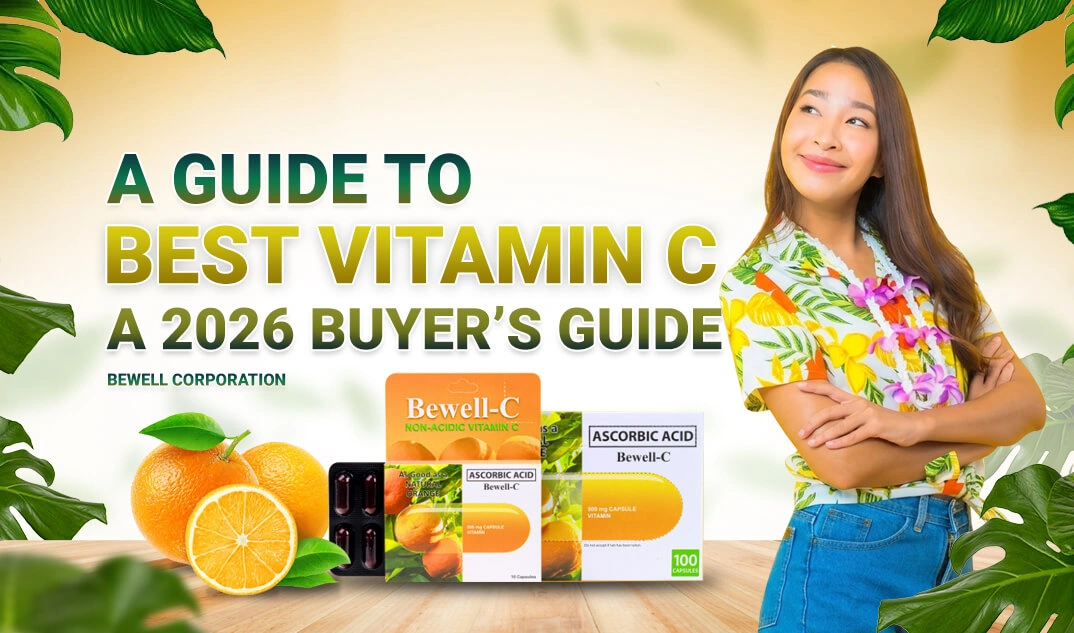
How to Choose the Best Vitamin C in the Philippines: A 2026 Buyer's Guide
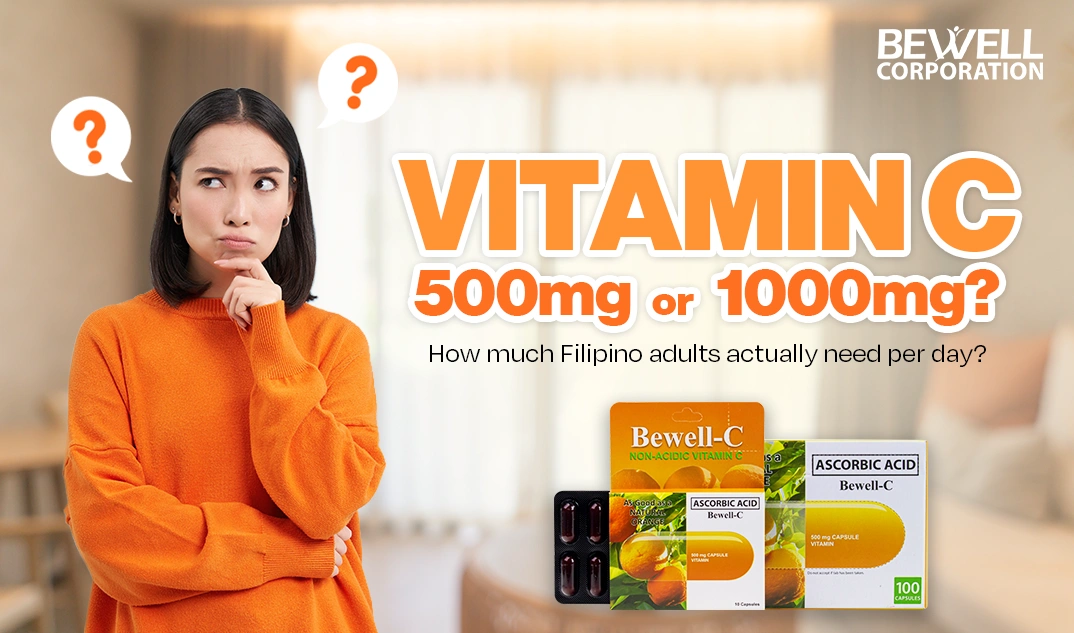
Vitamin C 500mg or 1000mg: How Much Filipino Adults Actually Need Per Day
Sources
Congress of the Philippines. Republic Act No. 6675, the Generics Act of 1988
Congress of the Philippines. Republic Act No. 9502, Universally Accessible Cheaper and Quality Medicines Act of 2008, section 38 amending Generics Act section 6
Congress of the Philippines. Republic Act No. 10918, the Philippine Pharmacy Act
Congress of the Philippines. Republic Act No. 9711, the Food and Drug Administration Act of 2009, amending Republic Act No. 3720
Department of Health, Philippines. Administrative Order No. 2010-0008 on the standard message for food and dietary supplements
National Institutes of Health, Office of Dietary Supplements. Vitamin C, Consumer Fact Sheet
Food and Nutrition Research Institute, Department of Science and Technology. Philippine Dietary Reference Intakes 2015, summary tables