 Blogs

 Nov 16, 2026
 10 mins read
Filipino children aged 1 to 12 need 45 mg of vitamin C a day, and babies need 30 to 40 mg, according to the Philippine Dietary Reference Intakes 2015. Vitamin C drops are measured with a dropper for babies; syrup is measured by the teaspoon for older children. Consult your pediatrician or physician before giving a vitamin product.
How Much Vitamin C Does a Child Need Per Day in the Philippines?
Filipino children aged 1 to 12 need 45 mg of vitamin C a day, according to the Philippine Dietary Reference Intakes (PDRI) 2015 of the Food and Nutrition Research Institute (FNRI), Department of Science and Technology. Babies need 30 mg a day up to 5 months and 40 mg from 6 to 11 months. Teenagers need 55 to 70 mg, depending on age and sex.
Vitamin C Per Day for Filipino Children (PDRI 2015)
0 to 5 months: 30 mg for boys and girls.
6 to 11 months: 40 mg for boys and girls.
1 to 2 years: 45 mg for boys and girls.
3 to 5 years: 45 mg for boys and girls.
6 to 9 years: 45 mg for boys and girls.
10 to 12 years: 45 mg for boys and girls.
13 to 15 years: 60 mg for boys, 55 mg for girls.
16 to 18 years: 70 mg for boys, 60 mg for girls.
Source: FNRI, Philippine Dietary Reference Intakes 2015.
The United States uses different reference values. The NIH Office of Dietary Supplements lists 40 mg a day from birth to 6 months, 50 mg for infants 7 to 12 months, 15 mg for children 1 to 3 years, 25 mg for 4 to 8 years, and 45 mg for 9 to 13 years. Both standards can be used side by side, but the PDRI figures are the ones a Philippine pediatrician works from.
How much your own child needs is a question for your pediatrician. Consult your pediatrician or physician before giving any vitamin product to a child.
Do Filipino Children Get Enough Vitamin C From Their Daily Diet?
Many do not. In the FNRI’s 2008 National Nutrition Survey, children aged 6 months to 5 years had a mean one-day vitamin C intake of 23.6 mg, and children aged 6 to 12 had 29.1 mg (FNRI, 2008 National Nutrition Survey, individual food consumption). The PDRI figure for children aged 1 to 12 is 45 mg a day.
The same FNRI survey summed it up across age groups: “More than 70% of Filipinos across population groups lacks iron, vitamin A, calcium and vitamin C in their daily diet.” These figures were measured in 2008.
Children cannot make their own vitamin C. The NIH Office of Dietary Supplements states that humans “are unable to synthesize vitamin C endogenously, so it is an essential dietary component.” Vitamin C has to come from food or from a vitamin product. The NIH also notes that “The ascorbic acid used in supplements has a bioavailability that is equivalent to that of the ascorbic acid that occurs naturally in foods”, meaning the body absorbs it as well as the vitamin C in food.
Whether your child would benefit from a vitamin C product on top of their meals is a question to bring to your pediatrician or physician.
Why Do Children Need Vitamin C and Zinc?
Vitamin C and zinc each have their own jobs in a growing body, which is why many children’s vitamin C products contain both. The NIH Office of Dietary Supplements describes them this way:
Collagen. Vitamin C helps the body make collagen. The NIH states that vitamin C “is required for the biosynthesis of collagen”, and that collagen “is an essential component of connective tissue, which plays a vital role in wound healing.”
Antioxidant. The NIH describes vitamin C as “an important physiological antioxidant.”
Iron from plant foods. Vitamin C helps the body absorb iron from vegetables and other plant foods. The NIH states that it “improves the absorption of nonheme iron, the form of iron that is present in plant-based foods.”
Growth. The NIH zinc fact sheet states: “Zinc also supports healthy growth and development during pregnancy, infancy, childhood, and adolescence.”
For a fuller explanation of the pairing, see vitamin C and zinc: what the combination actually does. Consult your pediatrician or physician before giving your child any vitamin or mineral product.
What Is the Difference Between Vitamin C Syrup and Drops?
Vitamin C drops are a concentrated liquid measured in small amounts with a dropper, made for babies and young toddlers. Vitamin C syrup is measured by the teaspoon, for toddlers and older children. Each product’s label sets the age range and the amount for each age.
The most important difference is how the strength is stated. Drops usually state the vitamin C content per 1 mL, while syrup usually states it per 5 mL, which is one teaspoon. That is why the two are never measured the same way.
Usually for: drops, babies and young toddlers; syrup, toddlers and older children.
Measured with: drops, the dropper supplied; syrup, a teaspoon or the measuring cup supplied.
Strength usually stated: drops, per 1 mL; syrup, per 5 mL (1 teaspoon).
What to watch at home: use the dropper for drops, never a spoon; use the teaspoon measure on the syrup label, never a dropper amount from another product.
Your pediatrician can tell you which form suits your child’s age. Consult your pediatrician or physician before the first use of either form.
What Is Non-Acidic Vitamin C?
On a vitamin C label, “non-acidic” refers to a mineral salt form of the vitamin, such as sodium ascorbate, the sodium salt of ascorbic acid, rather than plain ascorbic acid. The NIH Office of Dietary Supplements explains that most vitamin C products use ascorbic acid, “but some supplements have other forms, such as sodium ascorbate, calcium ascorbate, other mineral ascorbates”.
On a label the ingredient is often written as ascorbic acid with the form named, for example “ascorbic acid (as sodium ascorbate)”. What the two forms have in common, and how they differ, is covered in sodium ascorbate vs ascorbic acid. Ask your pediatrician or pharmacist which form suits your child.
How Do You Read a Vitamin C Syrup or Drops Label?
Reading a children’s vitamin C label takes about a minute. Check six things before you buy:
The generic name. For vitamin C it is ascorbic acid, often with the form it comes in, such as sodium ascorbate.
The strength and its measure. Check whether the amount is stated per 1 mL (drops) or per 5 mL (syrup).
Your child’s row in the age table. Use the amount printed for your child’s age group, and only for that product.
Other nutrients. Note whether the product also contains zinc or other vitamins, because those count toward your child’s daily total.
The registration number. Look for the Philippine FDA registration number printed on the pack, and ask your pharmacist if you cannot find it.
Storage and expiry. Follow the storage line on the label, shake the bottle if the label says so, and check the expiry date.
Pharmacists check the same details when you ask them for advice, as explained in which vitamin C pharmacists recommend and what they check first. If anything on the label is unclear, bring the bottle to your pharmacist or pediatrician.
How Do You Measure Vitamin C Drops and Syrup Correctly?
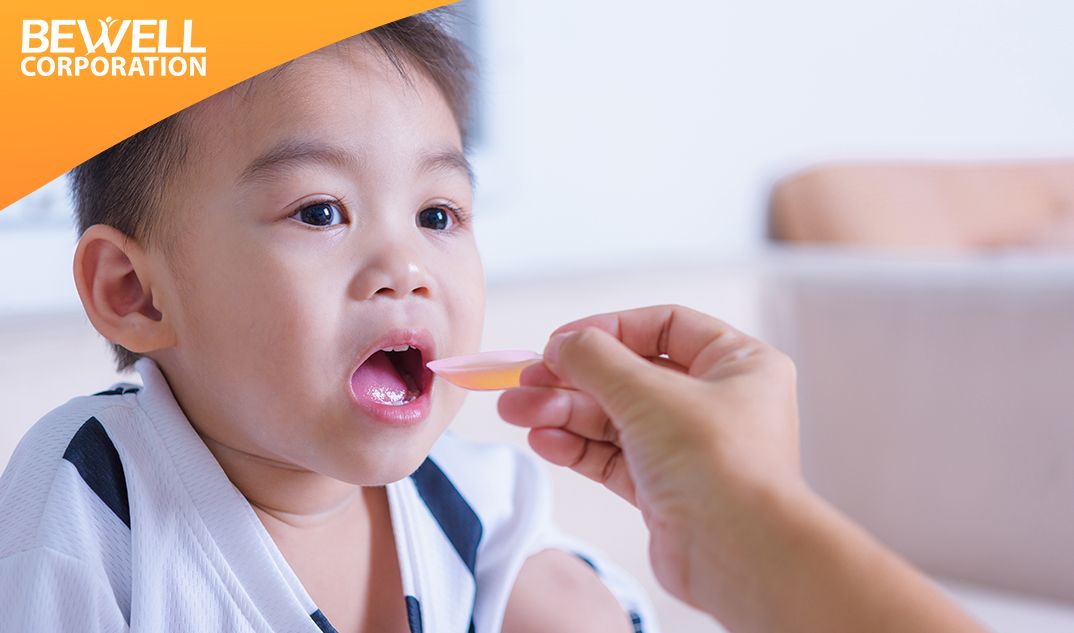
Measure vitamin C drops only with the dropper supplied with that product, and measure syrup with the measuring cup or spoon supplied. Give the amount on the label for your child’s age, or the amount your pediatrician tells you.
A few habits help:
Keep each measuring tool with its own bottle.
Read the age table again as your child grows, because children move from one row to the next.
Write down the time and amount if more than one adult gives the child vitamins.
Store the bottle where children cannot reach it, and follow the storage line on the label.
If a child is given a second measure by mistake, or swallows a large amount, call your pediatrician and have the bottle with you.
Can Children Take Vitamin C and Zinc Together?
Whether a child should take vitamin C and zinc together depends on the child’s age, nutritional needs, product formulation, physician’s advice and dosage. Vitamin C and zinc are often combined in one children’s syrup or drop, so your child gets both from a single measure. The one rule to remember is to count zinc from every product your child takes.
Multivitamins, appetite syrups and combination vitamin C products can all contain zinc. Do not give two zinc-containing products at the same time unless your pediatrician tells you to, and follow the label of the product you use. Consult your pediatrician or physician before combining any two vitamin products for a child.
When Should Parents Talk to a Pediatrician First?
Talk to your pediatrician before starting a vitamin C product in any of these situations:
If your baby is under 12 months, ask the pediatrician which product and amount to use, and follow the label’s age table for babies.
If your child already takes a multivitamin or another vitamin product, check before adding vitamin C, especially if both contain zinc.
If your child takes regular medicine, bring the bottle to the pediatrician or pharmacist. The NIH Office of Dietary Supplements notes that “Vitamin C dietary supplements can interact or interfere with medicines that you take.”
If your child has a kidney condition or has been told they have hyperoxaluria (too much oxalate in the urine), ask first, and show the pediatrician the precautions printed on the label.
For most children the picture is reassuring. The NIH Office of Dietary Supplements states: “In general, vitamin C has low toxicity, and high intakes of vitamin C do not cause serious adverse effects.” Follow the amount on the label and your pediatrician’s advice.
Is Bewell-C Kids Right for My Child?
That is a question for your pediatrician, who knows your child’s age, diet and any medicines they take. What we can do is tell you exactly what these products are, so you bring accurate information to that conversation.
Bewell Nutraceuticals Corporation is a Philippine FDA-licensed Trader and Distributor of both Drug and Food, operating from Quezon City since 2007. Bewell manages the formulation and the sourcing of raw materials for its products, which are manufactured by a partner and sold through Mercury Drug, Watsons, South Star Drug, Rose Pharmacy, Rojon, Bewell Express and other drugstores nationwide.
Its children’s range comes in both liquid forms covered above. Both are labelled “Non-Acidic” and contain ascorbic acid (as sodium ascorbate) with zinc:
Ascorbic Acid + Zinc (Bewell-C Kids) syrup is an orange-flavored syrup for children, registered with the Philippine FDA as an over-the-counter drug under registration number DRP-6089-08. The label directions are ½ teaspoon (2.5 mL) daily below 2 years, 1 teaspoonful (5 mL) daily from 2 to 6 years, and 1 to 2 teaspoonfuls (5 to 10 mL) daily from 7 to 12 years, “Or as recommended by the physician.”
Ascorbic Acid + Zinc (Bewell-C Kids Oral Drops) come with a dropper for babies and toddlers, and are registered with the Philippine FDA as an over-the-counter drug under registration number DRP-6088-06. The label directions are 0.3 mL (6 drops) below 3 months, 0.6 mL (12 drops) from 3 to 12 months, and 1.2 mL (24 drops) from 1 to 2 years, “Or as recommended by the physician.” The label also reads “SHAKE WELL BEFORE USING” and “KEEP OUT OF REACH OF CHILDREN”.
Both labels state: “For the prevention and treatment of Vitamin C and Zinc deficiencies.” Both also carry the precaution: “Vitamin C should be given with care to patients with hyperoxaluria. Tolerance may be induced in patients taking high dose.”
The drops are measured per mL and the syrup per teaspoon, so use only the measuring tool that comes with each product, and ask your pediatrician before giving both to the same child. Consult your pediatrician or physician to choose the form that suits your child.
Frequently Asked Questions
How much vitamin C does a child need per day in the Philippines?
Filipino children aged 1 to 12 need 45 mg of vitamin C a day, according to the Philippine Dietary Reference Intakes 2015 published by the Food and Nutrition Research Institute. Babies need 30 mg a day up to 5 months and 40 mg from 6 to 11 months, and teenagers need 55 to 70 mg depending on age and sex. Consult your pediatrician or physician about your own child.
How much vitamin C does a 1-year-old need in the Philippines?
The Philippine Dietary Reference Intakes 2015 set 45 mg of vitamin C a day for children aged 1 to 2 years. The United States figure from the NIH Office of Dietary Supplements is 15 mg a day for ages 1 to 3, but Philippine pediatricians work from the PDRI. Consult your pediatrician or physician before giving a 1-year-old any vitamin product.
What is the difference between vitamin C drops and syrup?
Vitamin C drops are a concentrated liquid measured with a dropper, made for babies and young toddlers, and their strength is usually stated per 1 mL. Vitamin C syrup is measured by the teaspoon for toddlers and older children, with the strength usually stated per 5 mL. Always use the measuring tool that comes with each product, and follow the age table on its label.
Do Filipino children get enough vitamin C?
Many do not. The FNRI’s 2008 National Nutrition Survey measured a mean one-day vitamin C intake of 23.6 mg for children aged 6 months to 5 years and 29.1 mg for children aged 6 to 12, while the PDRI 2015 figure for ages 1 to 12 is 45 mg a day. The same survey reported that more than 70% of Filipinos lack vitamin C in their daily diet. Ask your pediatrician whether your child needs a vitamin C product.
Can babies take vitamin C drops?
Yes, vitamin C drops are made for babies and young children, and the Philippine Dietary Reference Intakes set 30 mg a day for babies up to 5 months and 40 mg from 6 to 11 months. Start drops for a baby under 12 months on your pediatrician’s advice, use only the dropper supplied, and follow the age table on the label.
Can I give my child vitamin C syrup every day?
Children’s vitamin C syrups are labelled with a daily amount for each age group. Give the amount printed on the label for your child’s age, or the amount your pediatrician recommends, and check with your pediatrician if your child also takes other vitamin products, especially ones that contain zinc.
Can children take vitamin C and zinc together?
Whether a child should take vitamin C and zinc together depends on the child’s age, nutritional needs, product formulation, physician’s advice and dosage. Many children’s syrups and drops combine vitamin C and zinc in one product. The NIH Office of Dietary Supplements states that vitamin C is required for making collagen and that zinc “supports healthy growth and development during pregnancy, infancy, childhood, and adolescence.” Count zinc from every product your child takes, and do not give two zinc-containing products at once unless your pediatrician advises it.
What is non-acidic vitamin C for kids?
On a vitamin C label, “non-acidic” refers to a mineral salt form such as sodium ascorbate, the sodium salt of ascorbic acid, rather than plain ascorbic acid. The NIH Office of Dietary Supplements lists sodium ascorbate among the forms of vitamin C used in supplements. On a label it is often written as ascorbic acid with the form named, for example “ascorbic acid (as sodium ascorbate)”. Ask your pediatrician or pharmacist which form suits your child.
What happens if a child takes too much vitamin C?
The NIH Office of Dietary Supplements states that “In general, vitamin C has low toxicity, and high intakes of vitamin C do not cause serious adverse effects.” Its consumer fact sheet notes that taking too much can cause diarrhea, nausea and stomach cramps. If a child swallows a large amount or has symptoms, call your pediatrician and have the bottle with you.
Related Bewell Products
Ascorbic Acid + Zinc (Bewell-C Kids): non-acidic vitamin C, ascorbic acid (as sodium ascorbate), with zinc, in an orange-flavored syrup for children. Registered with the Philippine FDA as an over-the-counter drug, DRP-6089-08.
Ascorbic Acid + Zinc (Bewell-C Kids Oral Drops): non-acidic vitamin C, ascorbic acid (as sodium ascorbate), with zinc, in oral drops with a dropper for babies and toddlers. Registered with the Philippine FDA as an over-the-counter drug, DRP-6088-06.
Related Articles
Which Vitamin C Do Pharmacists Recommend and What They Check First
Vitamin C for Pregnant Women: How Much You Need in the Philippines
Important Information
This article is general information about vitamin C for children. It is not medical advice. Consult your pediatrician or physician before giving any vitamin product to a child, especially alongside other vitamins or medicines the child already takes, and always follow the directions printed on the product.
About Bewell Nutraceuticals Corporation
Bewell Nutraceuticals Corporation is a Philippine FDA-licensed Trader and Distributor of both Drug and Food, operating from Quezon City since 2007. Bewell manages the formulation and the sourcing of raw materials for its products, which are manufactured by a partner and sold through Mercury Drug, Watsons, South Star Drug, Rose Pharmacy, Rojon, Bewell Express and other drugstores nationwide. Its children’s range, Bewell-C Kids syrup and Bewell-C Kids Oral Drops, contains non-acidic vitamin C with zinc. To see the range and where to buy it, visit the Bewell-C Kids product page.
Sources
Food and Nutrition Research Institute, Department of Science and Technology. Philippine Dietary Reference Intakes 2015: Summary Tables (Recommended Nutrient Intakes, page 3)
Food and Nutrition Research Institute, Department of Science and Technology. 2008 National Nutrition Survey: Individual Food Consumption (mean one-day vitamin C intake by population group)
Office of Dietary Supplements, National Institutes of Health. Vitamin C: Fact Sheet for Health Professionals
Office of Dietary Supplements, National Institutes of Health. Vitamin C: Fact Sheet for Consumers (recommended amounts by age, forms, interactions)
Office of Dietary Supplements, National Institutes of Health. Zinc: Fact Sheet for Health Professionals
Bewell Nutraceuticals Corporation. Product labels of Bewell-C Kids syrup (DRP-6089-08) and Bewell-C Kids Oral Drops (DRP-6088-06)
If symptoms persist, consult your doctor.
Ascorbic Acid + Zinc is the generic name of Bewell-C Kids and Bewell-C Kids Oral Drops.