 Blogs

 Oct 24, 2026
 7 mins read
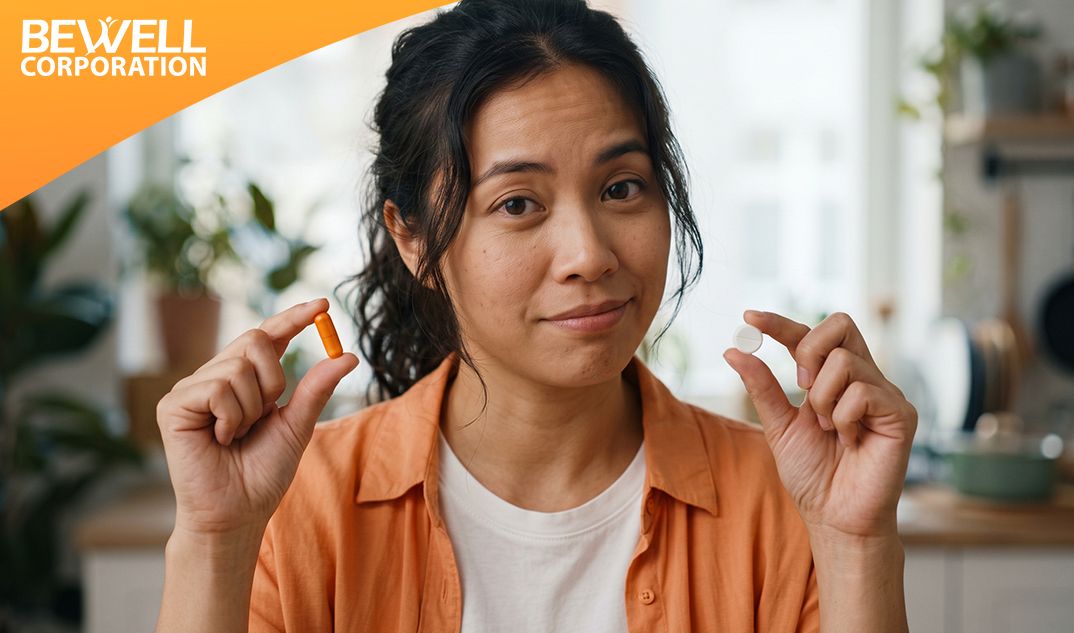
We found no published evidence that a capsule shell or a tablet, by itself, changes how much vitamin C your body absorbs. The NIH Office of Dietary Supplements discusses the chemical forms of vitamin C and is silent on tablets versus capsules. What does matter is how the product is designed to release its contents, whether you can swallow it comfortably, and storing it the way its label says. The right form is the one that suits you and that you will keep taking as labelled.
Tablet vs Capsule, on the Published Evidence
Does the shell change absorption? What the published evidence says: No source we opened says it does. The NIH fact sheet compares chemical forms of vitamin C, never shells. Source: NIH ODS.
Is supplement vitamin C absorbed like food vitamin C? What the published evidence says: Supplement ascorbic acid "has equivalent bioavailability to that of naturally occurring ascorbic acid in foods". Source: NIH ODS.
Do tablets and capsules always break down properly? What the published evidence says: Not always. In a test of supplements, capsules that failed passed with extra force added, "but not the tablets". Source: Gusev et al., 2020.
How does a capsule release its contents? What the published evidence says: The shell "dissolves in the stomach or bowel, and then releases the drug." Source: InformedHealth (IQWiG).
Do people find capsules easier to swallow? What the published evidence says: "Gelatine capsules were found easier to swallow than tablets." Source: Overgaard et al., 2001.
How common is trouble swallowing? What the published evidence says: "32% reported difficulty swallowing tablets or capsules whole." Source: Radhakrishnan et al., 2021.
Does pill shape matter? What the published evidence says: Oval pills travel "significantly faster through the esophagus than round pills." Source: Allen et al., 2025.
Is a Vitamin C Tablet or Capsule Better Absorbed?
It is the central question about the two forms, and the honest answer is that no source we could find says the shell makes a difference.
The NIH Office of Dietary Supplements fact sheet on vitamin C is a standard reference on the nutrient. It discusses the chemical forms vitamin C comes in, stating that "other forms of vitamin C supplements include sodium ascorbate; calcium ascorbate; other mineral ascorbates; ascorbic acid with bioflavonoids; and combination products, such as Ester-C". It reports that one study "found no differences in plasma vitamin C levels or urinary excretion of vitamin C among three different vitamin C sources". It does not discuss tablets versus capsules at all.
So the comparison people search for is one this reference does not make. We also found no statement from the NIH, the US FDA or the WHO saying the two shells are equivalent. The accurate position is that the question has not been shown to matter, not that it has been proven not to.
Why Release Design Matters More Than the Shell
A label tells you more than "tablet" or "capsule". Words such as timed-release, sustained-release or modified-release describe a product designed to let its contents out slowly, so it behaves differently from a standard one. Check the label for them.
Quality also depends on the product, not the form. A 2020 study by researchers including the NIH Office of Dietary Supplements tested supplement tablets and capsules with the standard US Pharmacopeia breakdown test. Some of each failed. When the testers added extra force, "all of the capsules that had failed initially, but not the tablets, passed." A registered product from a licensed company is the reasonable starting point for either.
Why Many People Choose Capsules
Capsules have a few practical points in their favour.
The shell opens up in the stomach. A capsule is a shell, typically gelatin, holding the contents as a powder or granules. According to InformedHealth, the health information service of Germany's Institute for Quality and Efficiency in Health Care, the shell "dissolves in the stomach or bowel, and then releases the drug." A standard tablet is compressed powder, and a review of how tablets break down describes that break-up as the first step before the contents can dissolve. How quickly any product is absorbed still depends on how it is made and what it contains.
You don't taste what's inside. The same source describes capsules as "long-lasting and tasteless".
Many people find them easier to swallow. In a 2001 study of patients' preferences, "gelatine capsules were found easier to swallow than tablets", and "in general capsules were preferred over tablets."
Which Is Easier to Swallow?
For many people this decides it. In a 2021 study of 152 adults, "32% reported difficulty swallowing tablets or capsules whole." The authors also note that a capsule "is often preferred due to easier swallow than tablets".
Shape matters too. A 2025 study in The Laryngoscope found that "oval-shaped pills traveling significantly faster through the esophagus than round pills," and the authors suggested oval shapes for people who find swallowing hard.
Size and shape matter, so pick one you are comfortable with.
Can You Crush a Tablet or Open a Capsule?
Many people do this when swallowing is hard. A 2014 review in Prescrire International noted it is "a common solution", and warned that the ingredient released "may degrade on contact with light, moisture or the food with which it is mixed for administration."
Vitamin C is sensitive to moisture, so this applies to it. Some products are also built not to be opened or crushed, especially modified-release ones. Check the label, and ask your pharmacist before crushing or opening anything. If swallowing is the problem, a different form such as a syrup or oral drops may be the simpler answer.
How to Choose Between a Tablet and a Capsule
There is no rule that one form suits everyone. These are the questions that actually separate products:
Can you swallow it comfortably? Look at size and shape, not just tablet or capsule.
Does the label say modified, timed or sustained release? If so, it is designed to behave differently from a standard product.
Is it registered? Every registered drug product carries an FDA registration number on its label. Look for it before you buy.
How will you store it? Please follow the storage conditions provided on the packaging label for every product.
Is it a form you will keep taking? The daily amount matters more than the shell, and we cover how much you need in vitamin C 500mg or 1000mg.
If you have a medical condition, are pregnant, are buying for a child, or take other medicines, ask your pharmacist or doctor which form suits you.
Where Bewell-C Fits
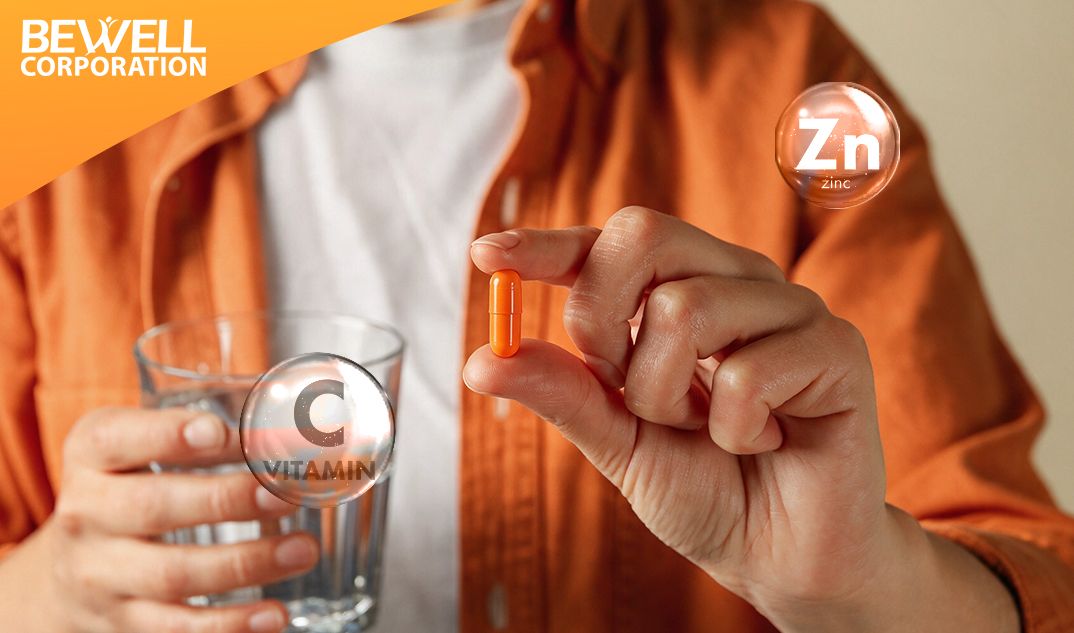
Bewell-C is sold as a capsule. It contains ascorbic acid (as sodium ascorbate), the non-acidic form of vitamin C. Bewell-C Zinc Protect is also a capsule, combining non-acidic vitamin C with zinc. For children, Bewell-C Kids comes as a syrup and as oral drops.
The questions above apply to Bewell-C as they do to any product: check that it is comfortable for you to swallow, read the label for its contents and storage instruction, and look for its FDA registration number on the pack. Bewell-C's label, for example, says: "Store at temperatures not exceeding 30°C. Protect from heat, light and moisture. Do not refrigerate."
See the Bewell-C product page for its label details.
What to Do With This in Practice
No source we found shows the shell itself changes absorption.
Check the label for modified or timed release. That is the design detail that can matter.
Pick a size and shape you can swallow comfortably.
Do not crush or open a product without checking the label or asking a pharmacist.
Store it the way its label says.
Anything involving a medical condition, a pregnancy, a child or other medicines belongs with your doctor or pharmacist.
About Bewell Nutraceuticals Corporation
Bewell Nutraceuticals Corporation is a Philippine FDA-licensed Trader and Distributor of both Drug and Food, operating from Quezon City since 2007. Bewell manages the formulation and the sourcing of raw materials for its products, which are manufactured by a partner and sold through Mercury Drug, Watsons, South Star Drug, Rose Pharmacy and other drugstores nationwide.
Frequently Asked Questions
Is a vitamin C tablet or capsule better?
No source we found shows that the shell itself makes one better absorbed than the other. The NIH Office of Dietary Supplements discusses the chemical forms of vitamin C and does not compare tablets with capsules. What matters more is whether the product is a standard or modified-release design, and whether you can swallow it comfortably.
How does a capsule release its vitamin C?
The shell, typically gelatin, dissolves in the stomach or bowel and then releases the powder inside, according to InformedHealth. A standard tablet is compressed powder that has to break apart first before its contents can dissolve. How quickly either is absorbed also depends on how the product is made and what it contains.
Can I open a vitamin C capsule or crush a tablet?
Check the label and ask your pharmacist first. A 2014 review warned that the released ingredient "may degrade on contact with light, moisture, or the food with which it is mixed for administration", and vitamin C is sensitive to moisture. Modified-release products in particular are often not meant to be opened or crushed.
How should I store vitamin C in the Philippines?
Keep it closed in its original pack and follow the storage condition on the label. Bewell-C's label, for example, says to store it at temperatures not exceeding 30°C and to protect it from heat, light and moisture.
Is Bewell-C a tablet or a capsule?
Bewell-C is a capsule containing ascorbic acid (as sodium ascorbate), the non-acidic form of vitamin C. Bewell-C Kids comes as a syrup and as oral drops. Check the label for its contents and storage instruction.
Related Bewell Products
Bewell-C Non-Acidic Vitamin C: Ascorbic acid (as sodium ascorbate), the non-acidic form of vitamin C, in a capsule.
Bewell-C Zinc Protect: Non-acidic vitamin C together with zinc, in a single capsule.
Bewell-C Kids: Non-acidic vitamin C with zinc, in a syrup and in oral drops, formulated for children.
For how to take any of these, read the instruction printed on that product's own pack, and ask your pharmacist or doctor if you are unsure.
Related Articles
Vitamin C 500mg or 1000mg: How Much Filipino Adults Actually Need Per Day
How to Choose the Best Vitamin C in the Philippines: A 2026 Buyer's Guide
Sources
[1] National Institutes of Health, Office of Dietary Supplements. Vitamin C: Fact Sheet for Health Professionals (read 7 October 2026). Forms of vitamin C and bioavailability of supplemental ascorbic acid.
[2] Gusev PA et al. J Pharm Sci 2020;109(6):1933-42. PMID 32081719.
[3] Radhakrishnan C et al. Patient Prefer Adherence 2021;15:29-40. PMID 33469272.
[4] Allen J et al. Laryngoscope 2025;135(10):3588-93. PMID 40342158.
[5] Prescrire International 2014;23(152):209-11. PMID 25325120.
[6] Bewell-C and Bewell-C Zinc Protect pack labels (storage instruction).
[7] InformedHealth, Institute for Quality and Efficiency in Health Care (IQWiG). Using medication: Learn More, Oral medications (last update 10 December 2025). Capsule shells dissolve and release the contents; capsules are tasteless.
[8] Overgaard AB et al. Patients' evaluation of shape, size and colour of solid dosage forms. Pharm World Sci 2001;23(5):185-8. PMID 11721676.
[9] Markl D, Zeitler JA. A Review of Disintegration Mechanisms and Measurement Techniques. Pharm Res 2017;34(5):890-917. Tablet break-up as the first step before dissolution.